


To create layered journal backgrounds, the most stable workflow is to define the base background first, then use PET tape and other materials to decorate and build depth.
In some cases, PET tape itself can act as the background — the key is understanding which role PET tape is playing.
Why PET Tape Works So Well for Layered Backgrounds
PET tape is widely used in journaling and scrapbooking because of its transparent and lightweight material.
Compared to paper-based decorative materials, PET tape:
-
Allows underlying colors and textures to remain visible
-
Creates smooth transitions between layers
-
Adds visual depth without adding bulk
This makes it especially suitable for layered backgrounds and collage-style layouts.
PET Tape as a Background vs as a Decorative Layer
Before starting, it’s important to understand that PET tape can serve two different roles in a journal layout.
1. PET Tape as the Background Itself
In some designs, PET tape is the background, not just decoration.
This usually happens when using:
-
Large-pattern PET tape
-
Landscape or scene-based PET tape
-
Continuous designs that visually dominate the page
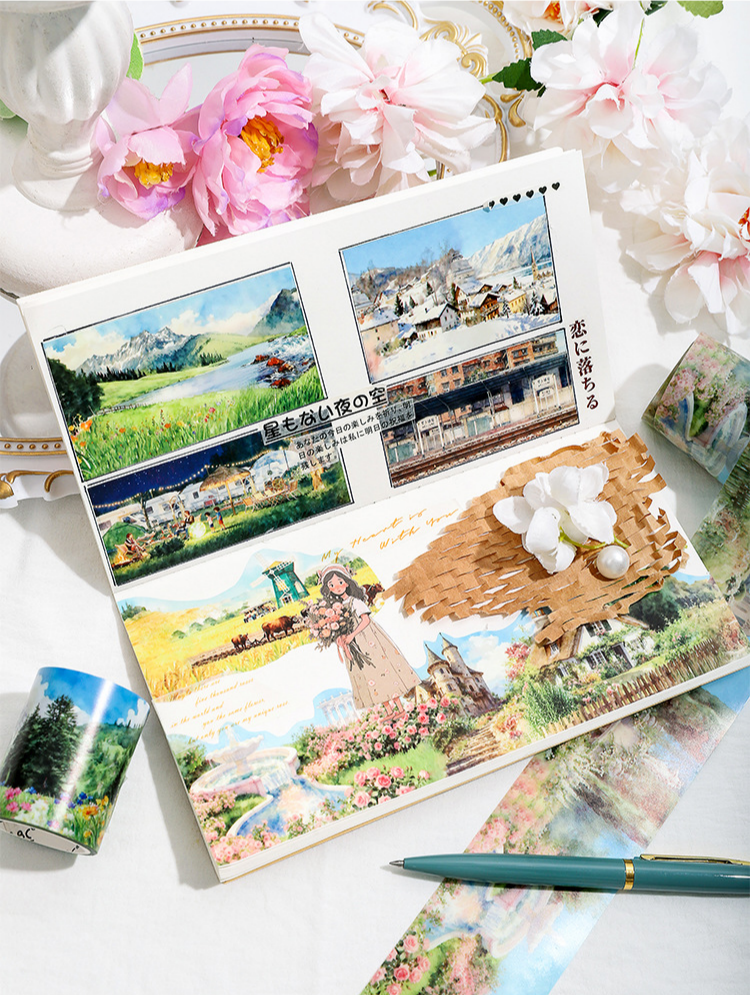
In this case, PET tape defines the visual space first.
The typical order becomes:
PET tape → decorative paper → stickers and accents
Here, PET tape replaces a traditional paper background and becomes the foundation of the page.
2. PET Tape as a Background Decoration Layer (Most Common)
More commonly, PET tape is used on top of an existing background.
This approach is especially beginner-friendly and flexible.
The usual order is:
Base background (paper or color) → PET tape → other decorative materials
In this role, PET tape:
-
Enhances atmosphere
-
Adds transparency and depth
-
Supports other elements without overpowering them
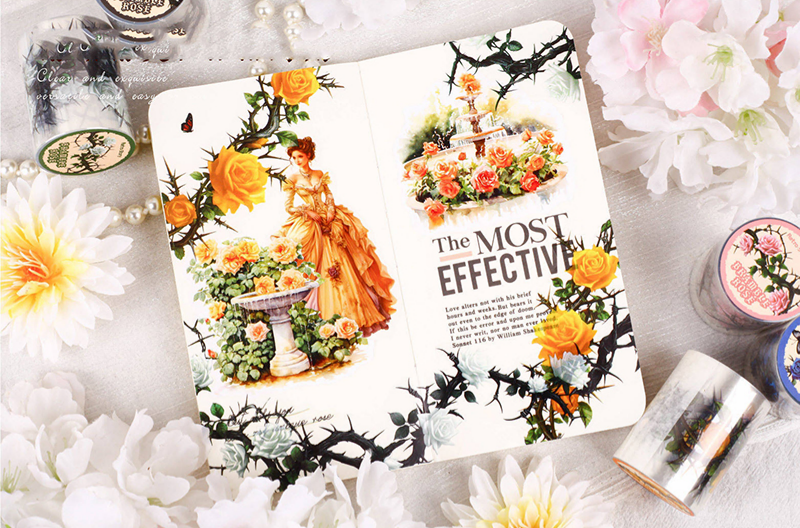
Understanding which role PET tape plays helps avoid overcrowded or unbalanced layouts.
Step 1: Create the Base Background (If Needed)
If PET tape is not your main background, start by defining the base.
This can be:
-
The natural color of the journal paper
-
Light watercolor or color washes
-
Decorative paper
-
Old book pages or textured paper
At this stage, focus only on setting the mood and space, not details.
Step 2: Apply PET Tape to Build Atmosphere
Once the background direction is clear, add PET tape.
Helpful tips:
-
Use larger PET tape designs for background areas
-
Cover only part of the page (about one-third to one-half)
-
Apply lightly at first before pressing firmly
PET tape works best when it enhances the background rather than replacing it unintentionally.
Step 3: Add Secondary Layers for Structure
After PET tape is in place, introduce structure using:
-
Decorative paper
-
Paper scraps
-
Frames or labels
These elements help define areas for photos, text, or focal points.
Make sure the PET tape underneath remains partially visible.
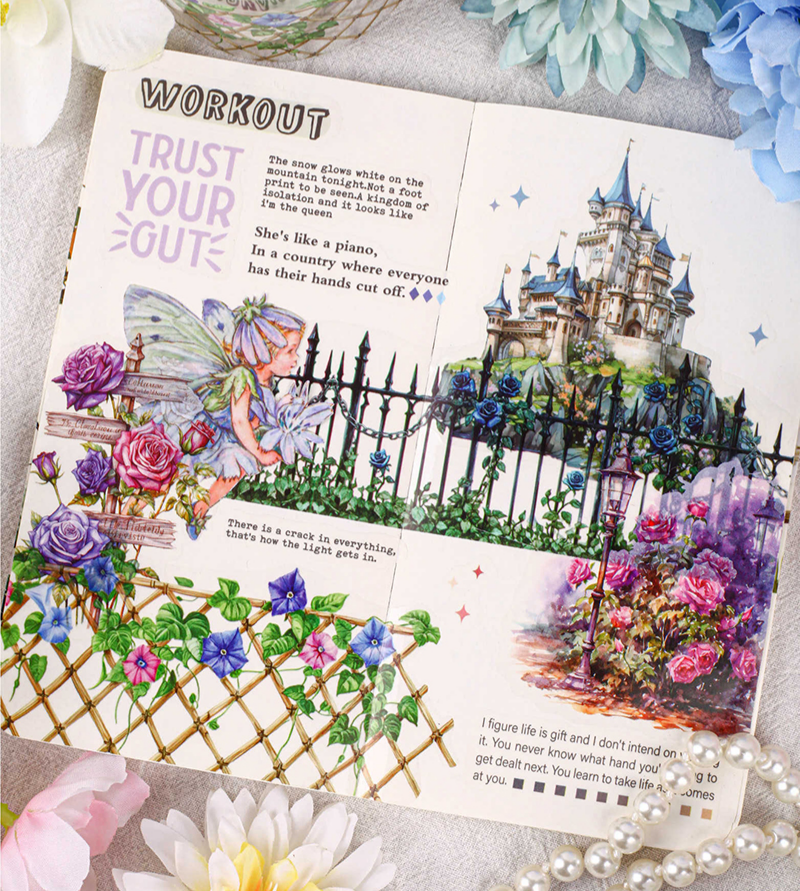
Step 4: Create a Clear Focal Area
Layered backgrounds feel more intentional when there is a focal point.
You can create one by:
-
Overlapping elements in a specific area
-
Using more detailed designs near the center
-
Leaving surrounding space more open
This keeps the page visually balanced.
Step 5: Finish with Light Decorative Accents
The final layer should be subtle.
Common finishing touches include:
-
Stickers
-
Thin washi tape
-
Handwritten text or small labels
These elements complete the layout without competing with the background layers.
Common Mistakes to Avoid
When working with PET tape backgrounds, avoid:
-
Using PET tape without deciding its role first
-
Covering the entire page unintentionally
-
Layering too many bold designs at once
-
Forgetting to leave space for writing
Most issues come from skipping the background-planning step.
Using This Method Across Journal Styles
This workflow adapts well to:
-
Vintage journals
-
Fantasy or landscape themes
-
Junk journals
-
Creative or art journals
Independent stationery stores like charmsart often curate PET tape specifically for journaling background decoration, offering designs that work both as subtle layers and as full background elements.
Final Thoughts
Creating layered journal backgrounds with PET tape starts with clarity, not decoration.
Once you decide whether PET tape is acting as the background or as a decorative layer, the rest of the process becomes much more intuitive. By building your page step by step, you can create depth, atmosphere, and balance without overwhelming the layout.